
Oil Water Separator – Industrial, Commercial & Environmental Compliance Guide (2026)
An Oil Water Separator is a mission-critical wastewater treatment system engineered to remove oil, grease, hydrocarbons, and petroleum-based contaminants from water before discharge or reuse. In today’s regulatory-driven industrial environment, oil water separation is no longer optional — it is a legal, environmental, and operational necessity.
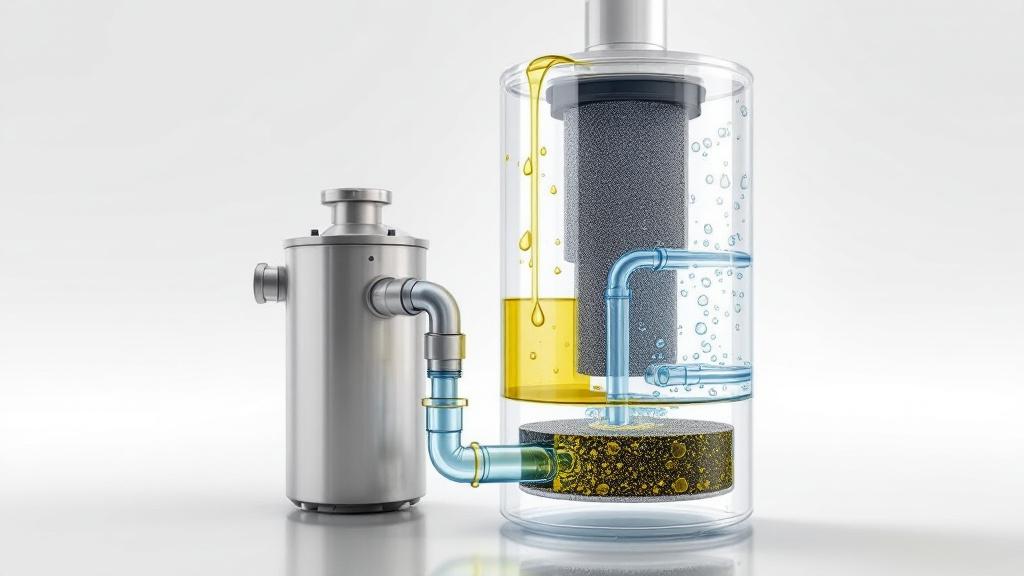
What Is an Oil Water Separator?
An Oil Water Separator (OWS) is a physical separation system designed to exploit the density difference between oil and water. Since oil is lighter, it naturally floats when wastewater velocity is controlled. Modern oil water separators enhance this natural phenomenon using engineered internals such as coalescing plates, parallel plate packs, baffle chambers, and sometimes centrifugal force.
At CBS Energy, oil water separators are designed for both free oil removal and complex industrial wastewater streams containing emulsified oil, suspended solids, and variable flow loads.
Why Oil Water Separation Is Mandatory (Regulatory Perspective)
Environmental authorities globally impose strict discharge limits for oil in wastewater — typically 10–15 ppm. Exceeding these limits can result in heavy fines or plant shutdowns.
- CPCB & SPCB norms (India)
- EPA guidelines (USA)
- IMO MEPC regulations (Marine)
- ISO 14001 environmental standards
Installing a certified oil water separator ensures long-term compliance and regulatory peace of mind.
How an Oil Water Separator Works – Detailed Process Flow
1. Inlet Flow Conditioning
Wastewater enters the separator through a diffuser that reduces velocity and turbulence, enabling gravity-based separation.
2. Primary Gravity Separation
Free oil rises to the surface while heavier solids settle at the bottom as sludge.
3. Coalescing Enhancement
Fine oil droplets collide and merge on coalescing media, forming larger droplets that rise faster.
4. Oil Collection & Skimming
Separated oil is collected in an oil chamber for safe disposal or recovery.
5. Treated Water Discharge
Effluent exits within permissible oil concentration limits.
Oil Water Separator – Video Demonstration
Types of Oil Water Separators (Technical Comparison)
Gravity Oil Water Separator
Simple, cost-effective design used for free-floating oil removal in low-flow applications.
Coalescing Plate Separator
High-efficiency separator capable of handling small oil droplets and moderate emulsions.
API Oil Water Separator
Designed as per API standards for refineries and petrochemical industries.
Centrifugal Oil Water Separator
Compact design using centrifugal force for high-performance separation.
Industry-Wise Applications
Manufacturing & Heavy Engineering
Removal of cutting oil, coolant, hydraulic oil from machine wastewater.
Automotive & Service Stations
Separates grease, fuel residues, engine oil from vehicle wash water.
Oil & Gas Industry
Handles high-load oily wastewater from drilling, refining, and storage terminals.
Marine & Shipping
Mandatory for bilge water treatment under IMO regulations.
Power Plants
Treats turbine oil contamination in cooling and utility water systems.
Design Parameters for Correct Oil Water Separator Selection
- Wastewater flow rate (m³/hr)
- Oil concentration (ppm)
- Oil droplet size distribution
- Presence of emulsified oil
- Available installation space
- Required discharge norms
Operational Benefits of Oil Water Separators
- Environmental compliance
- Reduced wastewater treatment cost
- Protection of downstream equipment
- Extended machinery life
- Water reuse and recycling
- Improved sustainability metrics
Maintenance & Long-Term Performance
- Periodic oil skimming
- Cleaning of coalescing plates
- Sludge removal
- Oil content monitoring
- Annual performance audits
Pricing & Cost Factors
Oil water separator pricing depends on:
- Capacity and flow rate
- Separator type
- Construction material (MS / SS)
- Automation level
- Industry-specific customization
For accurate pricing and technical consultation, contact CBS Energy.
Request Technical Consultation
Why Choose CBS Energy?
- Proven industrial experience
- Custom-engineered solutions
- Compliance-driven designs
- Expert technical support
- Pan-India service capability
Learn more about our expertise at CBS Energy.
Frequently Asked Questions (FAQs)
What is an oil water separator?
It separates oil and hydrocarbons from wastewater using gravity and coalescing techniques.
Can emulsified oil be removed?
Yes, advanced coalescing separators can handle emulsified oil.
Is oil water separator mandatory?
Yes, for most industrial wastewater discharges.
What oil ppm can be achieved?
Typically below 10–15 ppm.
Does it require electricity?
Gravity separators do not require power.